
THEY CROSSED BORDERS AND COVERED MILES ON FOOT
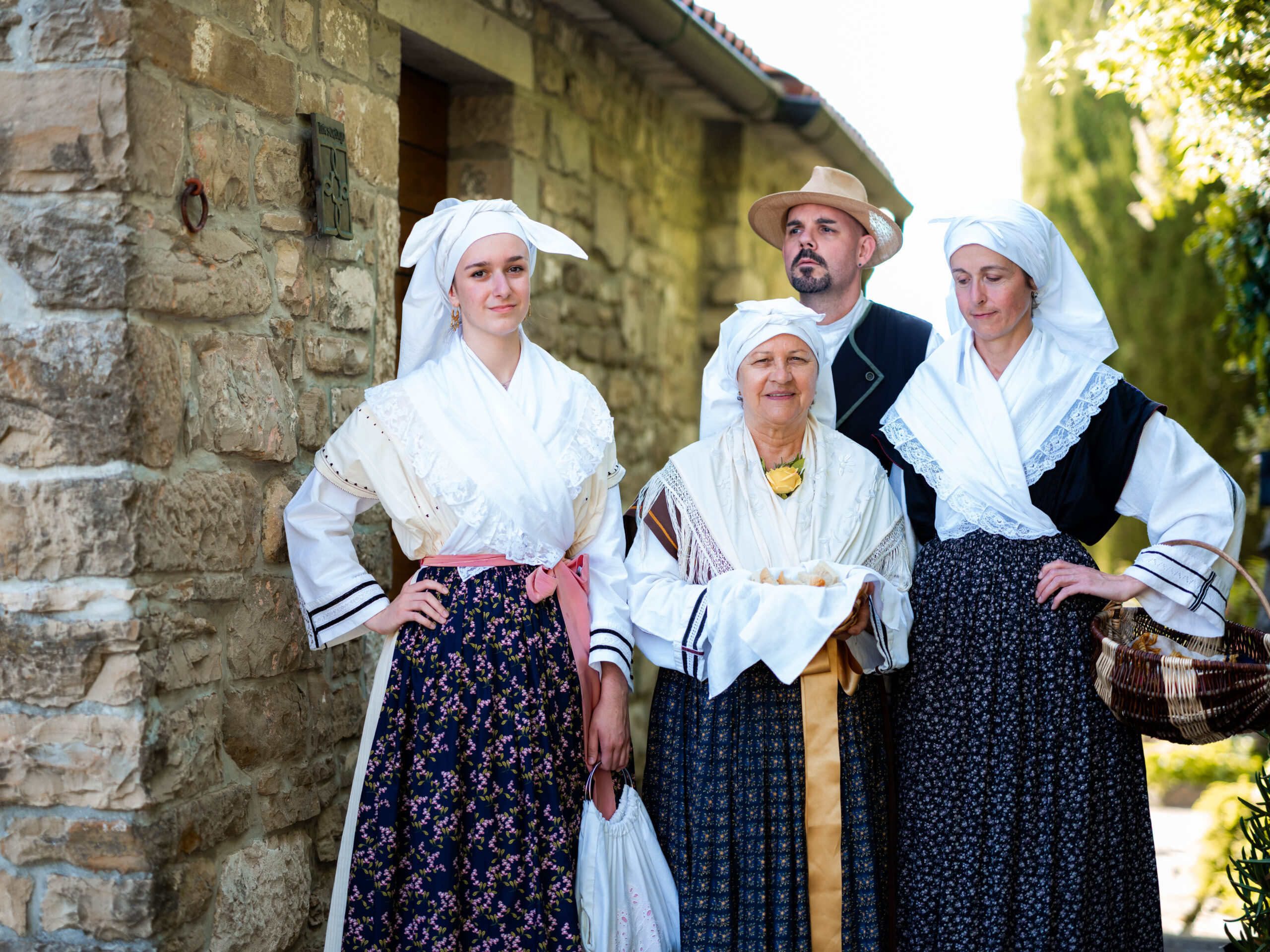
Who are the Šavrinke?

The Šavrinke women were travelers, entrepreneurial women, and representatives of the most common form of female daily labor migration. During that time, they resold agricultural and commercial products between Istrian villages and towns and provided various services.
The Šavrinke women were travelers, entrepreneurial women, and representatives of the most common form of female daily labor migration. During that time, they resold agricultural and commercial products between Istrian villages and towns and provided various services. Their trading activity was particularly vibrant between the two World Wars, although women were already engaged in trade at the end of the 19th century.
They played an exceptionally important role due to their constant mobility, which brought economic rhythm, stability, and news from urban areas, while simultaneously reflecting their entrepreneurship, resourcefulness, and determination.
The Šavrinke women crossed borders and covered miles on foot-carrying on their backs not only products, but also the burden of everyday life. They traveled from villages to towns, to Trieste and Koper, and to the coastal settlements of Istria, bringing with them cheese, eggs, wine, vegetables, and other produce, and returning with goods, news, items, and stories.
Their role went far beyond trade.
hey were a bridge between urban and rural life, between cultures, and between a fading past and a rapidly changing present.
In the Šavrinke women, we recognize the spirit of the local community, and in their footsteps, inspiration for creating sustainable and authentic tourist experiences. The Šavrinke project revives their heritage through stories, digital content, local products, modern interpretations, and thematic trails that take visitors along their former paths.

Read more about the Šavrinke women in our ethnographic study.
Ethnographic Study
The ethnographic research on the journeys and trade of the Šavrinke women was created as part of the project Šavrinka – Revitalization of the Cross-Border Cultural Heritage of the Šavrinke Women through Sustainable Tourism, implemented under the Interreg VI-A Slovenia–Croatia 2021–2027 programme. The study combines two ethnographic perspectives—the Slovenian, prepared by Tina Novak Pucer, ethnologist at the Regional Museum Koper, and the Croatian, created by Dr. Duga Mavrinac and Nikolina Rusac from the Ethnographic Museum of Istria – Museo etnografico dell’Istria from Pazin. Together, they reveal a rich and complex portrait of the Šavrinke woman as a traveling trader, daily migrant, and indispensable intermediary between the Istrian countryside and coastal towns.


This project is co-financed by the European Regional Development Fund under the Interreg VI-A Slovenia–Croatia 2021–2027 programme.
© 2026 Šavrinke | Interreg SLO–HR